
What’s in This Guide
- How Roof Tear-Off Disposal Usually Works
- What Can Affect Shingle Recycling Eligibility?
- Questions to Ask Roof Replacement Companies Before Tear-Off
- Frequently Asked Questions
- Plan Debris Handling Before Your Roof Replacement
Quick Facts
- Roof replacement companies typically collect tear-off debris as they work, then load it into a dumpster, trailer, or container for transport.
- Asphalt shingles may be recyclable when local facilities accept them and the load meets material requirements.
- Nails, flashing, underlayment, wood, and other construction waste may follow different recovery or disposal paths.
- Recycling access varies by facility, material condition, hauling logistics, and local market demand.
- Homeowners should ask how debris will be contained, hauled, recycled when feasible, and removed from the property.
A roof replacement creates more than a new roofing system. It also creates old shingles, nails, underlayment, flashing, damaged decking, and packaging that must be managed safely.
Most roof replacement companies plan debris handling before tear-off begins. Crews generally collect material, load it into a container, separate certain items when practical, transport the load, and deliver it to an approved recycling, recovery, transfer, or disposal facility.
How Roof Tear-Off Disposal Usually Works
1. Crews Contain Debris During Tear-Off
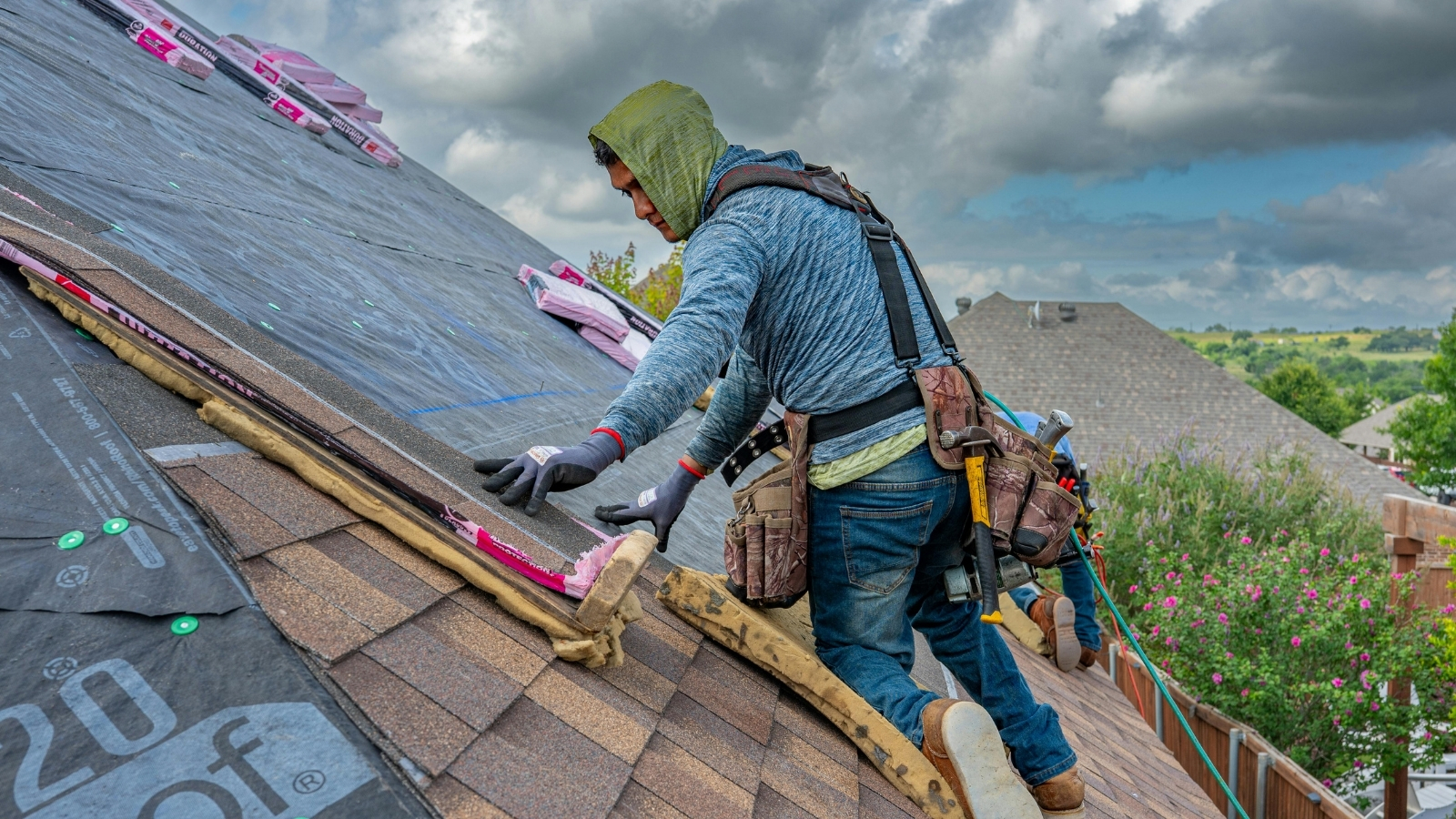
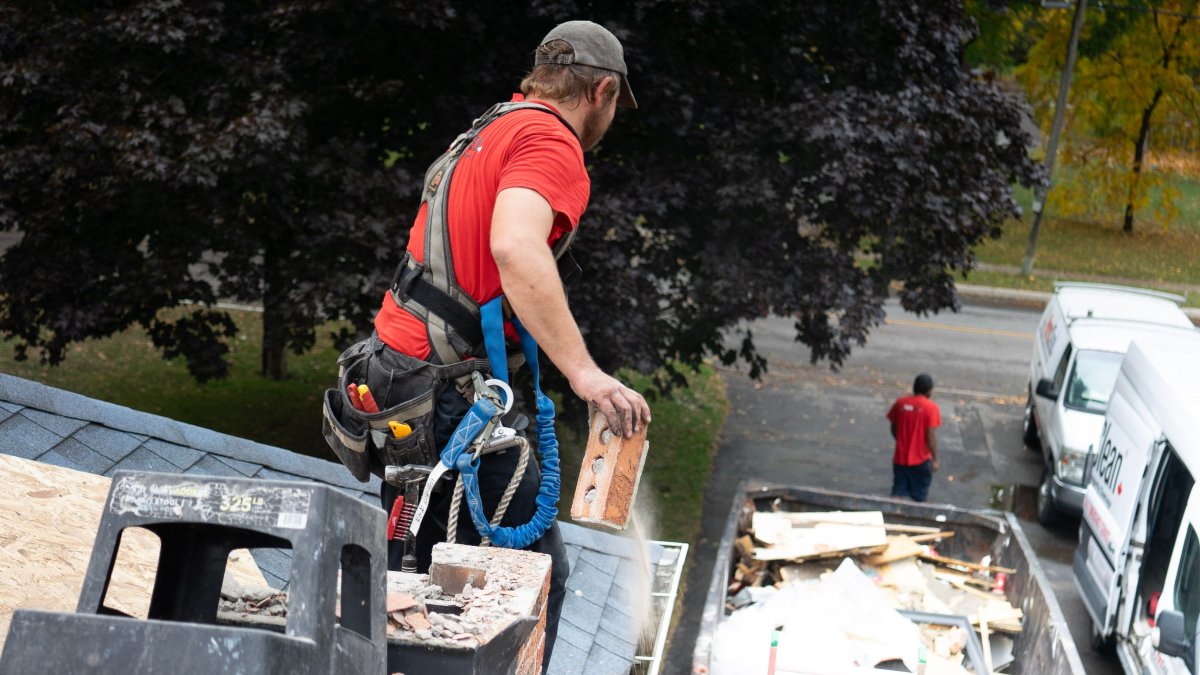
Before removing shingles, contractors typically protect access areas and decide where debris will be collected. A dumpster, dump trailer, or similar container helps keep old roofing materials concentrated instead of scattered around the property.
Crews also perform ground cleanup as work progresses. Magnetic sweepers are commonly used to collect loose roofing nails, although no cleanup method can guarantee every fastener will be recovered.
2. Materials Are Sorted When Practical
A tear-off load may include asphalt shingles, underlayment, metal flashing, vents, nails, wood, and miscellaneous construction waste. Some contractors separate recyclable metals or clean shingle material onsite. Others transport mixed debris to a facility that sorts or processes acceptable materials.
The New York State Department of Environmental Conservation (NYSDEC) lists roofing shingles among construction and demolition debris handled by C&D debris facilities. Registered facilities may accept source-separated, uncontaminated asphalt roofing shingles and roofing paper, subject to applicable acceptance requirements.
3. Recyclable Shingles Go to an Accepting Facility
Shingle recycling is possible, but it is not automatic. A recycler may consider whether shingles are asphalt-based, sufficiently clean, separated from unacceptable materials, and economical to process.
GAF’s RoofCycle™ process, for example, collects tear-off shingles and converts eligible material into mineralized asphalt powder, briquettes, and granules for new shingles or industrial applications such as roads and pavement.
4. The Contractor Transports the Debris
After the tear-off, roof replacement companies typically haul the container or arrange pickup through a waste or recycling provider. Transportation depends on project volume, local facility options, container capacity, and whether materials were separated.
For homeowners, the key issue is accountability. Debris should leave the property through a planned waste stream rather than remain piled onsite.
5. Non-Recyclable Material Goes to Lawful Disposal
Not every shingle load can be recycled. Mixed debris, contamination, facility restrictions, or lack of a practical recycling outlet can send material to a transfer station or landfill.
Availability changes by location and facility. A contractor should be able to explain the intended roof tear-off disposal route and whether recycling is feasible for the project.
What Can Affect Shingle Recycling Eligibility?
- Material type: Asphalt shingles have established recycling pathways, while other roofing materials may require different handling.
- Contamination: Loads mixed with prohibited or unsuitable material may be rejected.
- Facility rules: Acceptable materials and sorting standards differ by facility.
- Distance and hauling logistics: A recycling option may exist but be impractical because of transportation requirements.
- End-market demand: Recovered shingle material needs a viable use, such as asphalt-related manufacturing or paving.
For homeowners in Wappingers Falls, NY, it is reasonable to ask where the contractor expects to take the debris before work starts.
Questions to Ask Roof Replacement Companies Before Tear-Off
- What type of debris container will you use?
- How will you protect my driveway, landscaping, and access areas?
- Do you separate metal, shingles, or other recyclable materials?
- Is shingle recycling available for this project?
- Which type of facility will receive the tear-off debris?
- How will you handle nails and final ground cleanup?
- Is debris hauling and disposal included in the written scope?
Clear answers make it easier to compare roof replacement companies on jobsite management, not just roofing materials and installation.
Frequently Asked Questions
How long does a roof tear-off usually take in Wappingers Falls, NY?
Timing varies based on the roof size, pitch, number of existing layers, crew size, and weather conditions. A roof replacement company can provide a more specific schedule after inspecting the property.
Can I keep some of my old shingles after the roof is removed?
Usually, you can ask the contractor before work begins if you want to keep a small amount of the old material. Any shingles you keep should be set aside before the remaining tear-off debris is hauled away.
Does removing old shingles create a lot of dust?
Some dust and small debris are normal during a roof tear-off. Contractors generally use jobsite practices intended to keep the work area manageable while the old roofing is being removed.
Should children and pets stay away during a roof tear-off?
Keeping children and pets away from active roofing work is generally advisable. Roof replacement companies may also recommend limiting access to certain areas of the property while tear-off is underway.
Does having multiple shingle layers affect roof tear-off disposal?
It can. Multiple roofing layers typically create a larger volume of tear-off material, which may affect container needs, hauling, and overall debris handling for a Wappingers Falls roofing project.
Plan Debris Handling Before Your Roof Replacement
A clean tear-off process protects the property and keeps construction waste moving through an appropriate disposal or recovery stream. Before work begins, ask how the crew will contain debris, whether shingle recycling is available, where materials will go, and how final cleanup will be handled.
If you are planning a roof replacement in Wappingers Falls, NY, contact Roofer of Wappingers Falls LLC to discuss your roofing needs and request a roofing quote.